



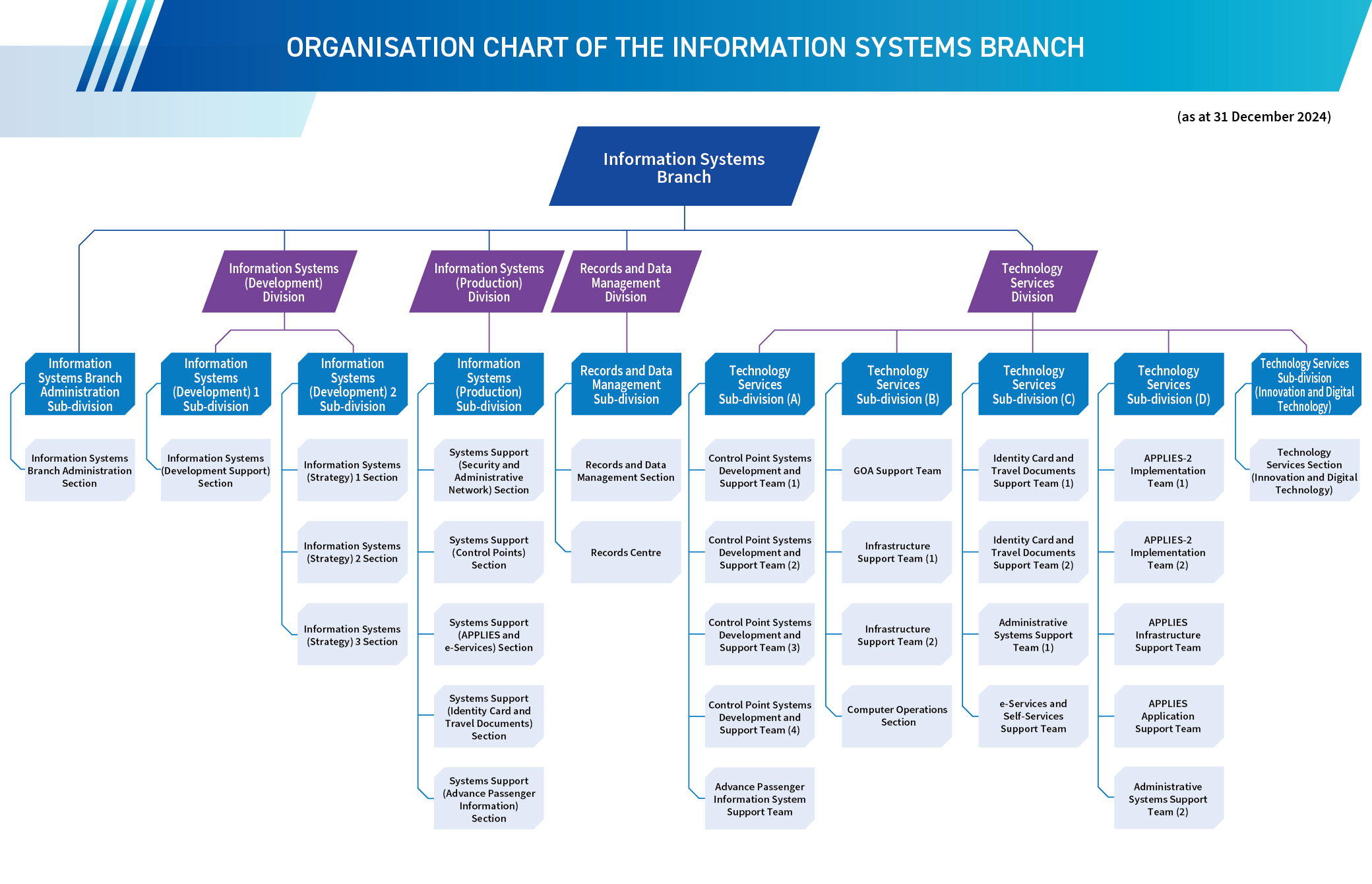
Organisation Chart of the Information Systems Branch

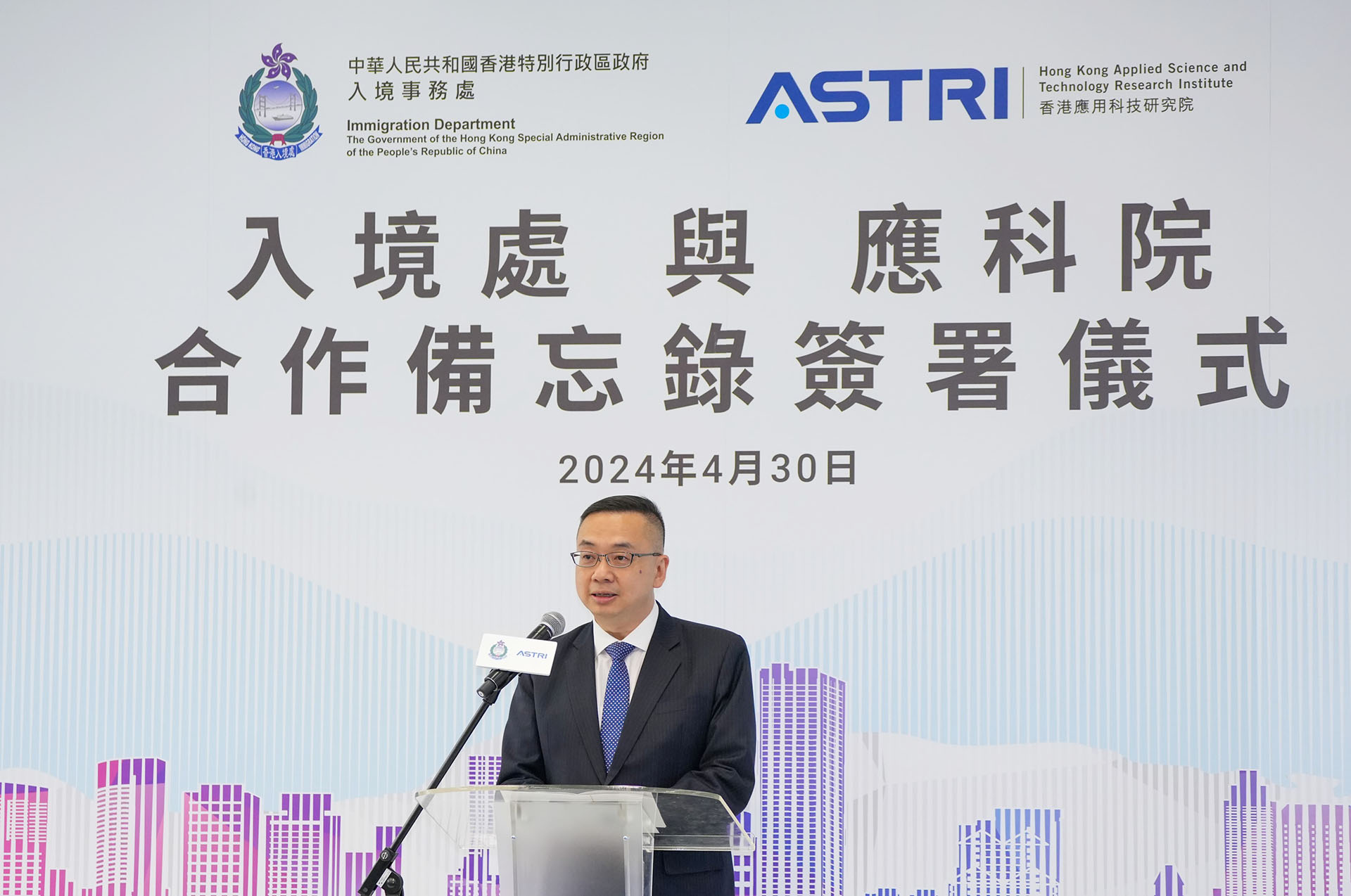
The department and the ASTRI signed a Memorandum of Understanding in April 2024, with both parties collaborating to explore innovative technologies to provide more efficient and higher-quality public services.
The Information Systems Branch is commanded by an Assistant Director. It handles all matters concerning the development and operation of information systems, records management and the protection of personal data privacy of the department.
In the face of the ever-changing social and economic environment, the department has been formulating its information technology strategy with a proactive attitude and excellence to keep pace with the digital era of the 21st century and has been actively exploring various advanced technologies for delivering efficient and quality services to the public, whilst ensuring that the business practices and processes are compliant with the provisions of the Personal Data (Privacy) Ordinance.
The Information Systems Branch comprises four divisions by function and takes charge of the information systems and related matters of the department. The Information Systems (Development) Division is responsible for formulating and implementing the department's information systems strategy and developing new information systems to meet future operational needs. The Information Systems (Production) Division is responsible for the management and security of information systems in operation as well as the on-going enhancement and upgrade of the information systems and related processes. The Records and Data Management Division is responsible for all issues relating to data privacy, access to information and management of departmental records. The Technology Services Division provides technical support for the application and development of information systems in the department. The former three divisions are each headed by a Principal Immigration Officer while the Technology Services Division is under the charge of a Chief Systems Manager.
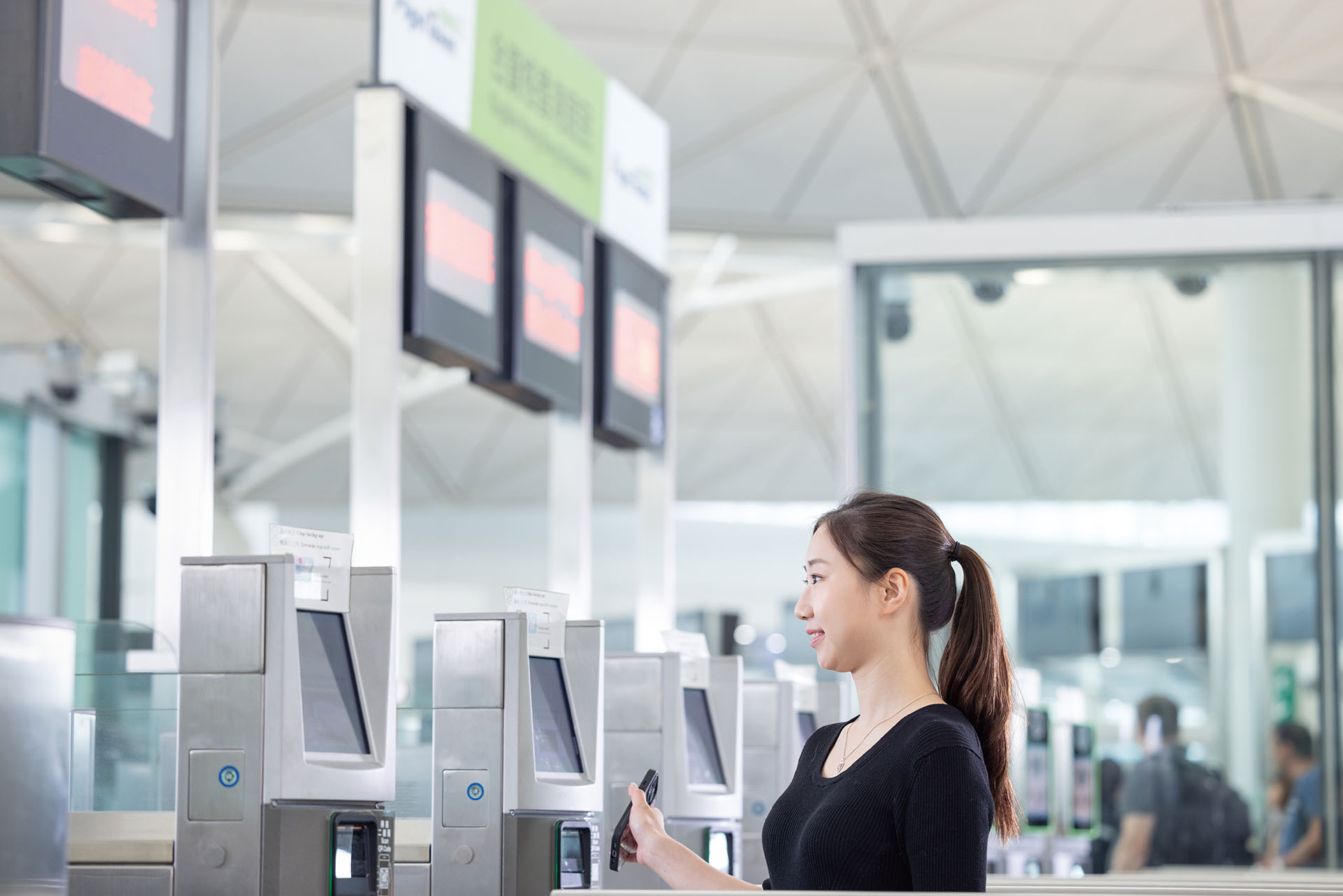
Contactless e-Channel offers fast, convenient and hygienic immigration clearance service. Eligible Hong Kong residents may use encrypted QR code generated by Contactless e-Channel mobile application and facial recognition technology to perform self-service immigration clearance.

Next Generation Application and Investigation Easy Systems (APPLIES-2) enhances various immigration services and assists case officers in assessing applications more effectively through automated functions for record checks, thereby further enhancing the overall efficiency in case processing and assessment.
The department launched ICONS in phases between 2016 and 2017 to replace and consolidate the four ageing control point systems in order to meet new business needs. The project included the upgrade of 437 e-Channels to multi-purpose e-Channels, the installation of 158 new multi-purpose e-Channels, the introduction of the Smart Departure service to allow eligible visitors holding electronic passports to perform self-service departure clearance at e-Channels without prior enrolment, and the introduction of other new functions to enhance the overall handling capacity of control points.
To further enhance the functions of e-Channels and facilitate the convenience of their use, the department introduced in 2018 newly designed e-Channels at new control points, including the Express Rail Link West Kowloon Control Point, the Hong Kong-Zhuhai-Macao Bridge Control Point and the Heung Yuen Wai Boundary Control Point. Apart from enhancing the efficiency in management and maintenance, the new e-Channels can also provide a more convenient and comfortable user experience for members of the public.
As at the end of 2024, a total of 756 multi-purpose e-Channels, which could be flexibly deployed for use by eligible Hong Kong residents or visitors, were installed at control points.
At present, there are 6 designated e-Channels at the Lo Wu and Lok Ma Chau Spur Line Control Points respectively for cross-boundary primary school students under the age of 11. Simplified clearance procedures for cross-boundary students have also been adopted at the Lok Ma Chau Spur Line, Shenzhen Bay, Lok Ma Chau, Man Kam To, Lo Wu, Hong Kong-Zhuhai-Macao Bridge and Heung Yuen Wai Control Points. With the use of portable clearance devices, more expeditious immigration clearance service has been provided for enrolled cross-boundary students.
The e-Channel service at the Airport Control Point has been extended to frequent visitors aged 18 or above holding a Hong Kong Special Administrative Region (HKSAR) Travel Pass, an APEC Business Travel Card with the economy code 'HKG' or a Hong Kong International Airport Frequent Visitor Card. It has also been further extended to eligible members of frequent flyer programmes of various airlines. Frequent visitors who hold a valid travel document for which an entry visa/permit for entering Hong Kong is not required, have made visits to Hong Kong by air via Hong Kong International Airport for no less than 3 times in the past 12 months immediately before enrolment and have no adverse record in Hong Kong, may also enrol for the e-Channel service.
In order to provide greater travel convenience for both Hong Kong and Macao residents, enrolled Macao permanent residents may use e-Channels to perform immigration clearance at all control points. Reciprocally, eligible Hong Kong residents may use the automated immigration clearance service at control points in Macao. Hong Kong non-permanent residents holding an HKSAR Document of Identity for Visa Purposes (Doc/I) and Macao non-permanent residents holding a Visit Permit for Residents of Macao to HKSAR may also enjoy such facilitation.
The Express e-Channel was introduced at the Lo Wu Control Point to provide a faster e-Channel service to enrolled Hong Kong residents aged 18 or above who are existing e-Channel users. The service was extended to the Shenzhen Bay Control Point and the Lok Ma Chau Spur Line Control Point in November 2018.
The department launched e-Channels with a voice navigation function for visually impaired persons to perform self-service immigration clearance at the Lok Ma Chau Spur Line, Macau Ferry Terminal, Shenzhen Bay, China Ferry Terminal, Lo Wu, Express Rail Link West Kowloon, Hong Kong-Zhuhai-Macao Bridge, Hung Hom and Heung Yuen Wai Boundary Control Points. Users of the service simply need to press the activation button at the entrance of an e-Channel to initiate the voice navigation function and voice instructions will then be delivered to guide them to complete the clearance process.
Under the arrangements for mutual use of automated immigration clearance services, eligible HKSAR passport holders can enrol for the automated immigration clearance services of the participating countries/territories, whilst eligible passport holders of the participating countries/territories can enrol for the e-Channel service in Hong Kong. Following the arrangements for mutual use of automated immigration clearance services with Korea, Singapore, Germany and Australia, a similar arrangement with Thailand was implemented in September 2018. Moreover, with effect from December 2018, further facilitation for enrolment for automated clearance services has been provided by Hong Kong and Singapore on a mutual basis, so that eligible passport holders of both sides can enjoy greater convenience when they travel between the two places.
The department is actively discussing the mutual use of automated immigration clearance services with other countries/territories and it is expected that more countries/territories will become our partners in this aspect.
The department introduced in February 2019 a new form of Consular Corps Identity Card (CCIC), which is embedded with a chip module. Enrolled holders may perform self-service immigration clearance at e-Channels in control points with their new CCICs.
The Contactless e-Channel service was first launched at the Hong Kong International Airport, Hong Kong-Zhuhai-Macao Bridge, Shenzhen Bay and Kai Tak Cruise Terminal Control Points in December 2021, and was extended to all control points in 2022. Eligible Hong Kong residents may enrol for the service by downloading the department's Contactless e-Channel mobile application on a smartphone with biometric authentication. Upon successful enrolment with the mobile application, they can use the encrypted QR code generated by the mobile application to enter a Contactless e-Channel and perform self-service immigration clearance through facial recognition technology.
Alternatively, eligible Hong Kong residents aged 18 or above may also use their smart identity cards to enrol for the service directly at any Contactless e-Channel and perform immigration clearance through facial recognition technology.
The department, in collaboration with the Airport Authority Hong Kong (AAHK), launched the Flight Token e-Channel service at the Hong Kong International Airport in October 2022 to provide Hong Kong residents with a more convenient departure clearance service. Hong Kong residents aged 11 or above who choose to use the Flight Token service of the AAHK and depart through the Security Gates at the departure hall with an HKSAR passport, an HKSAR Doc/I or a Mainland Travel Permit for Hong Kong and Macao Residents may use the Flight Token e-Channel service for automated departure clearance. When using the service, they simply need to look at the camera for verification of identity by facial recognition technology, and the departure clearance will be completed without having to present any document throughout the process.
Since 29 April 2023, the eligible age for holders of electronic Exit-Entry Permits for travelling to and from Hong Kong and Macao for using the e-Channel service has been adjusted from aged 16 or above to aged 11 or above. Eligible persons can use the e-Channels for self-service immigration clearance at all control points.
Since 21 July 2023, the e-Channel service has been extended to foreign domestic helpers, non-local students and imported workers. Hong Kong residents of the above categories aged 11 or above holding smart identity cards may use the Contactless e-Channel service upon enrolment via the department's Contactless e-Channel mobile application.
On 19 July 2024, the department, in collaboration with the Public Security Police Force, the Identification Services Bureau, the Public Administration and Civil Service Bureau and the Public Security Forces Affairs Bureau of Macao, launched the Mutual Use of QR Code between HKSAR and Macao SAR Clearance Service. After successful activation via the Contactless e-Channel mobile application, eligible Hong Kong residents can generate an encrypted QR code through the mobile application to use the Automated Immigration Clearance Service in the Macao SAR for automated immigration clearance. Meanwhile, eligible Macao permanent residents can also generate an encrypted QR code through the Macao One Account mobile application to use e-Channels for automated immigration clearance.
SMARTICS-2, an online information system that supports the whole process of smart identity card application from appointment booking, registration, production to issuance, is the foundation for the self-service immigration clearance service. The system has been implemented at all Registration of Persons Offices since November 2018. The new smart identity card is made of high-quality polycarbonate materials. On top of the contact chip interface, the new smart identity card also supports a contactless chip interface. This helps reduce wear and tear on the identity card and the chip due to card reading, thus making the identity card more durable. Moreover, with the introduction of a number of state-of-the-art security features and other sophisticated security designs, coupled with a more complex pattern background on the card face as compared with the old form of smart identity card, the new smart identity card has stronger protection against counterfeiting or photo substitution. To provide faster and more convenient services for members of the public, SMARTICS-2 has introduced various new functions and facilities, including a mobile application for making appointments for identity card application or replacement, filling in relevant electronic forms in advance and enquiring about the queuing status. Since 13 December 2024, the time for issuing new identity cards has been shortened from the current seven working days to five working days. In addition to the Self-service Tag Issuing Kiosks and Self-service Collection Kiosks, the department has also set up new Personal Documentation Submission Kiosks and Personal Documentation Collection Kiosks at its new headquarters in Tseung Kwan O, so that eligible members of the public can apply for or collect their identity cards and HKSAR passports in a one-stop manner.
The e-Passport-2 System supports one-stop-shop travel document application service, including appointment booking, application processing and issuance of travel documents. The system was launched on 14 May 2019 to tie in with the issuance of the newly introduced HKSAR Electronic Passport (e-Passport) and Electronic Document of Identity for Visa Purposes (e-Doc/I). In order to effectively enhance the security, reliability and interoperability of the Next Generation e-Passport and e-Doc/I, a number of state-of-the-art security features, such as tactile relief features, full colour UV printing and a transparent window with the holder's portrait engraved thereon by laser engraving technology, have been introduced. To cater for the needs of the visually impaired, the document number and the date of expiry can be printed in braille on the back of the data page of the Next Generation e-Passport and e-Doc/I, thereby facilitating the visually impaired in identifying their travel documents. The e-Passport-2 System has also introduced various new measures to optimise the passport application process. They include online submission of passport applications from eligible applicants aged below 11 years old, submission of passport applications via the mobile application and completion of electronic forms in advance upon appointment booking. In addition, applicants may choose to use the self-service photo-taking function at Travel Document Submission Kiosks free of charge, so as to make the process faster and more convenient. The kiosks also accept payment by Octopus and Faster Payment System (FPS), providing more payment options for the public. With the launch of Passport Collection Kiosks on 30 October 2020, eligible HKSAR passport applicants may choose to collect their passports in a self-service manner.
APPLIES-2 is an online information system that supports the processing of applications for visas, permits, travel passes, etc.; registration of births, deaths and marriages; verification of eligibility for permanent identity card, and the handling of requests for assistance from Hong Kong residents in distress outside Hong Kong as well as cases related to enforcement, removal assessment and litigation. By adopting advanced technologies, the system enhances various immigration services and assists case officers in assessing applications more effectively through automated functions for record checks, thereby further enhancing the overall efficiency in case processing and assessment. Coupled with the use of the Electronic Services System, the public can enjoy relevant e-Services, including booking of appointments, submission of applications and supplementary documents, payment of application fees, and downloading of 'e-Visas', through the Internet.
Pre-arrival Registration for Taiwan Residents allows eligible Taiwan residents to apply for pre-arrival registration directly by electronic means through the Internet free of charge without having to go through airlines in Taiwan. The application result will also be displayed instantly, providing greater convenience for Taiwan residents visiting Hong Kong.
Indian nationals may also apply for pre-arrival registration by electronic means through the Internet free of charge for visiting or transiting Hong Kong.
By making use of the Electronic Data Interchange System, the APEC Business Travel Card Scheme facilitates pre-cleared entry of accredited business visitors to participating economies of the Asia-Pacific region. Business travel card holders coming to Hong Kong can use the 'Hong Kong Resident' counters at control points for immigration clearance.
The GOA System enables speedy communication and dissemination of information through electronic means within the department and among policy bureaux and departments of the HKSAR Government.
The e-Leave System is the first government-to-employee application project. All staff members of the department can access the web-based system to process their leave applications, and calculate and keep track of leave records through any networked computer workstation in the department.
OASIS is an online information system which aims at enhancing productivity in operational and administrative areas. It facilitates the management of information relating to personnel, stores and inventory.
The department's Intranet provides an electronic channel for fast dissemination of multi-media information, strengthens staff's communication and serves as an online self-learning platform.
The departmental homepage adopts a user-friendly mobile phone interface, which facilitates the browsing of the homepage with various mobile devices. Not only can members of the public obtain the latest news and information of the department on the homepage, they can also access websites of related government departments/organisations via the hyperlinks provided.
OPIS is a brand new data analytics platform that supports the processing of an increasing amount of operational information, data analytics and information management.
Equipped with data-analytic functions, OPIS enables departmental members to conduct analysis on a variety of operational information effectively by promptly transforming data into interactive reports and dashboards for further analysis. It enhances the department's capability for processing and analysing various statistical data and helps departmental members make better business and resources planning decisions.
The Immigration Department Mobile Application is equipped with a number of functions, including application services, appointment booking, form filling, submission of supplementary documents and information, payment of fees, as well as 'e-Visa' enquiry and downloading. Members of the public may also use the mobile application to make enquiries on application status, tag status and the latest information on the estimated passenger waiting time at major land boundary control points. They may even call the 24-hour 1868 Hotline of the Assistance to Hong Kong Residents Unit (AHU) using network data and submit the Online Assistance Request Form.
In 2024, the department introduced functions such as application services related to Chinese nationality and payment/transaction status enquiry for travel document applications into the Immigration Department Mobile Application, enabling applicants to submit applications through the mobile application anytime and anywhere without having to visit an Immigration Office in person. In the same year, the department introduced the 1868 Chatbot in the mobile application in order to further enhance the convenience for Hong Kong residents in distress or in need of assistance outside Hong Kong to contact the AHU. Besides, other useful information, such as Outbound Travel Tips which provide the general public with tips on travelling abroad, and the link to the department's official YouTube channel, can also be found in the mobile application.
In addition to the 1868 Hotline Network Data Call function and Online Assistance Request Form, the new 1868 System also features designated WhatsApp and WeChat hotlines and new functions such as instant messaging and chatbot to facilitate Hong Kong residents in distress outside Hong Kong to seek assistance from the department. Implemented by phases since 4 December 2023 and powered by artificial intelligence and automation technologies, the new system supports the 24-hour operation of the AHU, so that Hong Kong residents in distress outside Hong Kong can reach the department through more channels. The staff members of the AHU can also handle the requests for assistance more efficiently, providing practical and appropriate assistance to Hong Kong residents in distress outside Hong Kong in a timely manner.
To meet the aviation security requirements of the Convention on International Civil Aviation and to align Hong Kong with other aviation hubs worldwide, as well as to enable the department to further enhance its clearance and enforcement capabilities to prevent undesirables, such as potential non-refoulement claimants, from boarding flights heading to Hong Kong, the department implemented the Advance Passenger Information System (API System) on 3 September 2024. According to the Immigration (Advance Passenger Information) Regulation (Regulation), airline operators are obliged to capture the required data from travellers' travel documents and transmit advance information about the travellers and their flights to the department through the API System. The API System will instantly process the information and transmit the direction issued for each traveller (i.e. 'board' or 'no-board' direction) back to the airline operator. Airline operators shall act upon the directions given through the API System to allow or not allow specific traveller(s) to board flights heading to Hong Kong.
To allow sufficient time for over 100 airline operators to connect to the API System and to ensure that the system will run in a smooth and orderly manner, the rollout will be carried out in phases. A transitional period of around 12 months will also be provided. The provisions of offences and defences relating to the API System under the Regulation will only come into effect after the transitional period.
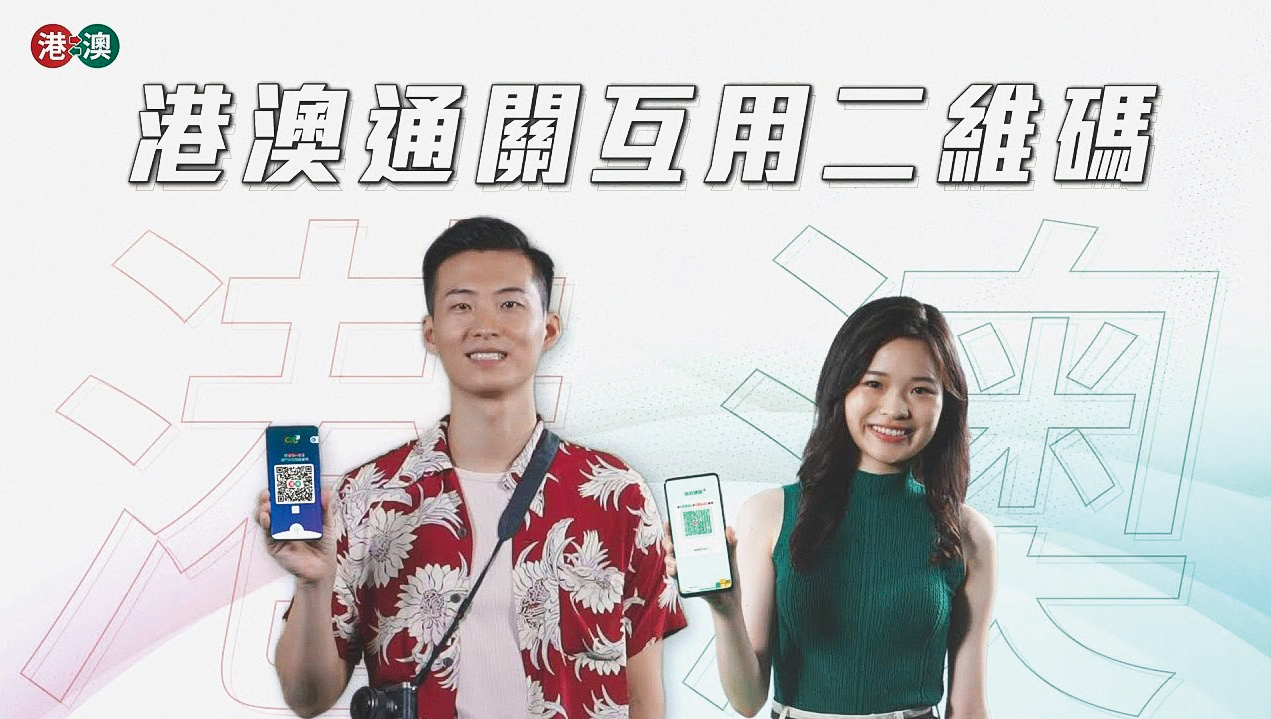
Mutual Use of QR Code between HKSAR and Macao SAR Clearance Service enables eligible residents of both Hong Kong and Macao to enjoy automated immigration clearance using encrypted QR code generated through mobile applications, further facilitating travel between the two regions.
The department attaches great importance to personal data privacy and records management and is committed to ensuring that the business practices and processes and the handling of personal data and records held are compliant with the provisions of the Personal Data (Privacy) Ordinance, as well as other relevant laws, regulations and guidelines. Departmental policies, guidelines and procedures on personal data protection and records management are formulated, regularly reviewed and updated to ensure staff's compliance in handling personal data and proper management of records. To enhance the protection of personal data privacy and records management, the department has implemented the Privacy Management Programme. The Privacy Compliance Group has also been formed to monitor the department's overall privacy compliance situation and review the related programme controls. Meanwhile, training sessions, seminars and workshops are conducted to cultivate a culture of respect for privacy by increasing staff's awareness of personal data privacy protection and good records management as well as staff's competence in handling data access requests and access to information applications.
The department has fully implemented electronic services. Members of the public can access a wide range of online services through the Internet or the department's mobile applications. For details, please visit the department's homepage (www.immd.gov.hk).
Members of the public and other users can also submit information to the department by email. Examples are the provision of prescribed particulars of a crew and passengers by an aircraft captain under the Immigration Ordinance and the making of a request by a member of the public for a Certificate of Registrar of Marriages for marriage to be solemnised in church under the Marriage Ordinance.
Electronic payment is now accepted for all applications for services of the department. With effect from 19 December 2022, the payment service gradually supports the use of FPS in making payments for services related to registration of births, deaths and marriage, as well as application for visas/entry permits and travel documents, etc. Besides, the payment service further supports payment by Mainland e-wallets (Alipay, WeChat Pay and UnionPay App) in the Mainland from 27 September 2024 onwards, providing more payment options for the applicants.
In support of the Digital Policy Office's proposal for streamlining the overall operating workflow of the 'iAM Smart' platform, the department has introduced the 'one-tap login' function in various electronic services. Members of the public who access these electronic services through their 'iAM Smart' accounts can use the 'e-ME' form filling function directly to fill in their personal information automatically on the online forms, without the need for re-authentication, thereby enjoying a seamless experience.
This initiative enhances efficiency and convenience while demonstrating the department's commitment to digital transformation and enhancement of public services.
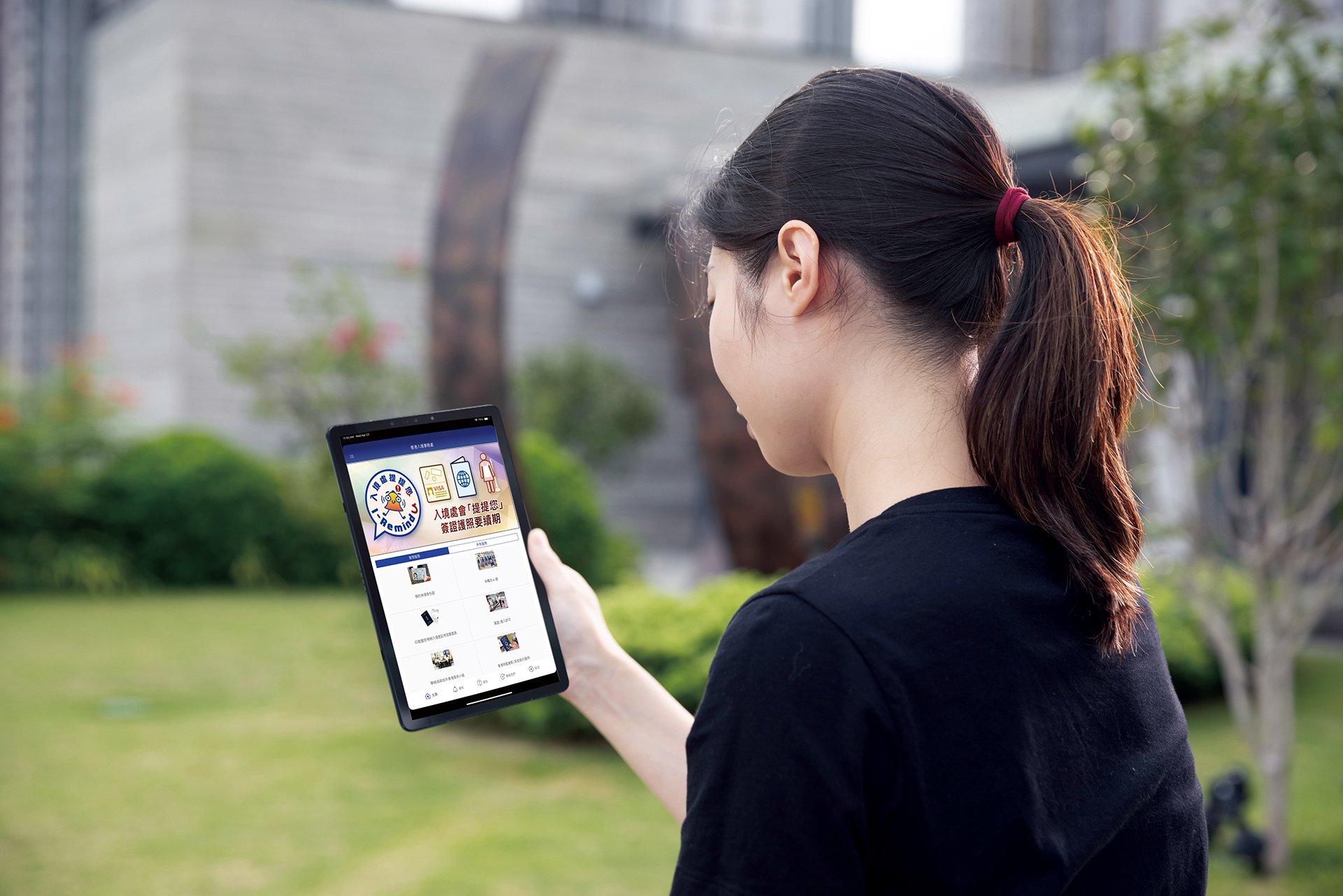
The Immigration Department Mobile Application is equipped with a number of functions, including application services, appointment booking, form filling, submission of supplementary documents and information, payment of fees, as well as e-Visa enquiry and downloading.
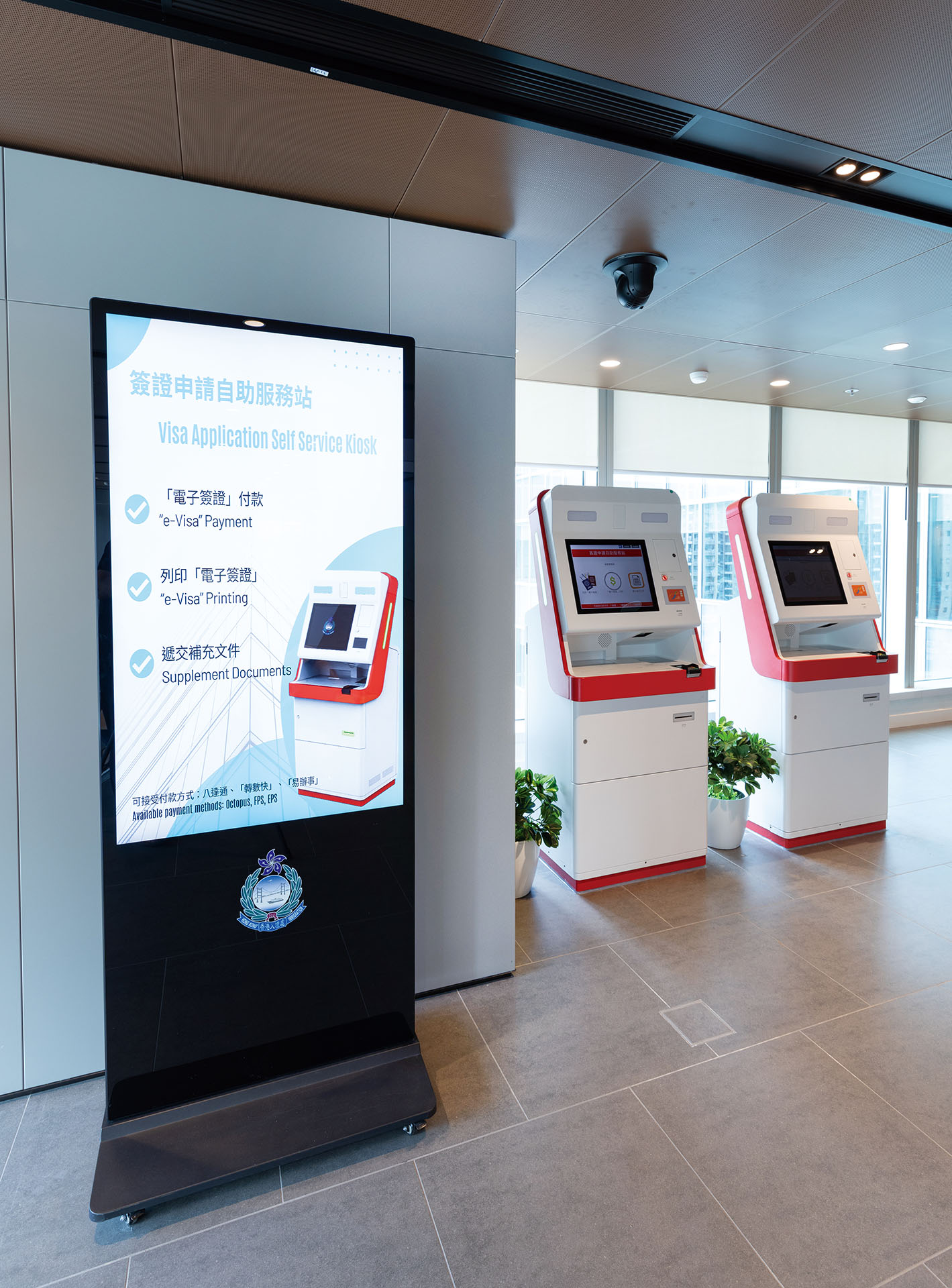
Located at the Immigration Department Headquarters in Tseung Kwan O, the Visa Application Self-Service Kiosks enable applicants to complete payment and submission of supplementary documents in a self-service manner, thereby enhancing the efficiency of application processing.
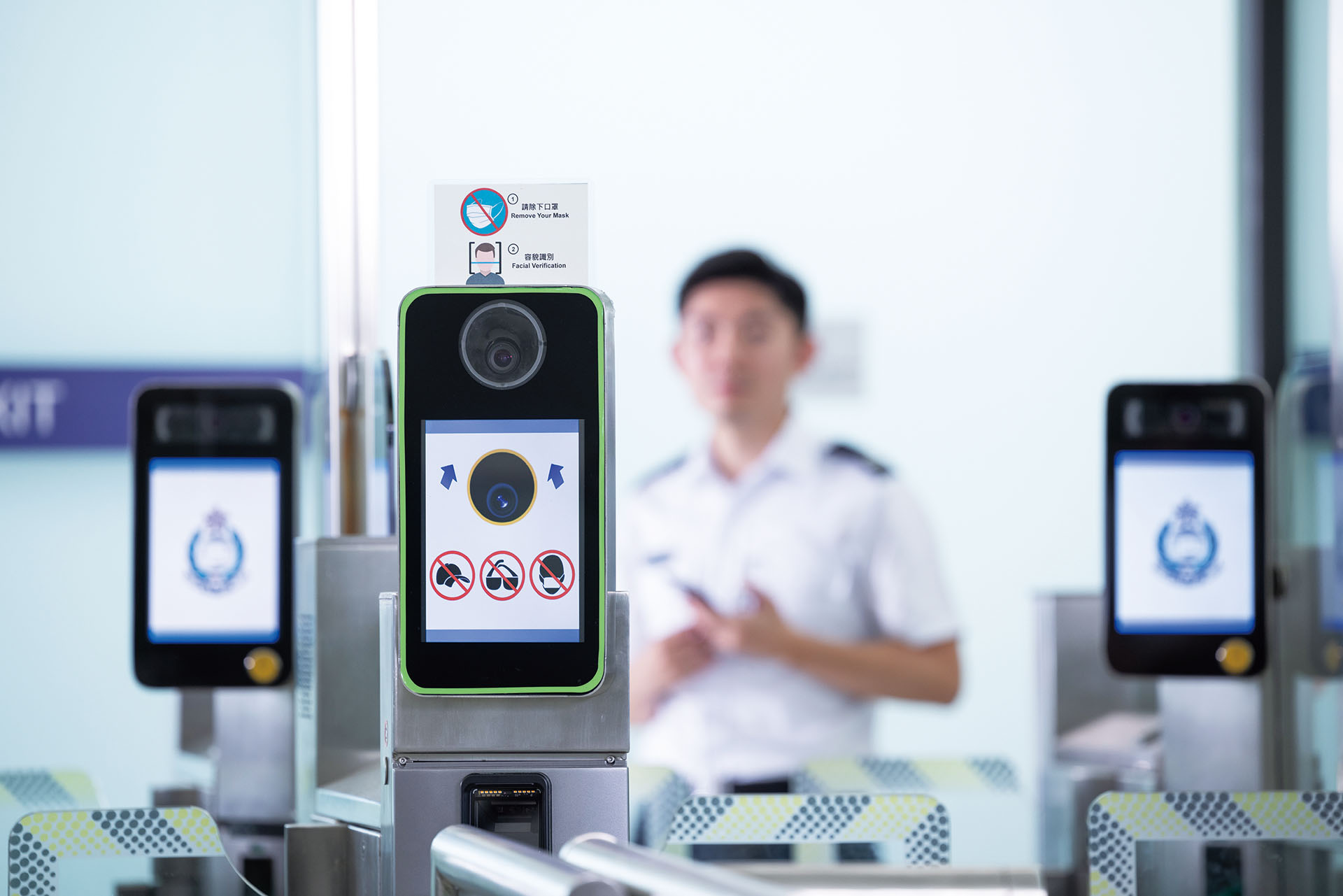
The Flight Token e-Channel service uses facial recognition technology for identity verification, allowing eligible Hong Kong residents to complete departure clearance without having to present any document.
To improve its service quality, the department commissioned a consultant to conduct the ISS-3 Review in March 2010 with a view to formulating a long-term information systems strategy. The review recommended the department to implement the following separate but inter-related systems to enhance its service quality and capability to meet the challenging business requirements in the coming years.
Two data centres and a new IT infrastructure under the New ITI project have commenced operation and ICONS was fully implemented in 2017. Moreover, SMARTICS-2 was launched in 2018 to tie in with the implementation of the Territory-wide Identity Card Replacement Exercise. The e-Passport-2 System was also launched in 2019.
The system functions of Phase 1 of APPLIES-2 were implemented from September 2021 to January 2022, while those of Phase 2 were rolled out in batches during the period from September 2022 to July 2023. As regards HRMS, system development commenced in November 2023. It is expected to be launched in the first to second quarter of 2025.
The department has introduced electronic services for visa application in phases since 28 December 2021 to allow applicants to complete the entire process of visa-related application online through the GovHK website, or the department's website or mobile application.
The services were extended to all visa types, including visas/entry permits for visits, employment, investment, training, residence and study, on 29 November 2022. Applicants can complete the electronic application forms and upload supporting documents online. Where necessary, they can also submit supplementary documents and/or enquire about the status of their applications online. Upon approval of the application, an applicant may make payment online and download the 'e-Visa' instantly.
To further work in tandem with the HKSAR Government's smart city initiative and proactively seize the opportunities of innovative technology and artificial intelligence technology, the department commissioned an external consultant in August 2024 to conduct holistic reviews on information systems and formulate the ISS-4 as its long-term information technology development blueprint.
The department and the Hong Kong Applied Science and Technology Research Institute (ASTRI) signed a Memorandum of Understanding on 30 April 2024 in the presence of the Secretary for Security.
The department and the ASTRI will explore innovative proposals for the application of technologies in four areas, namely Innovative Immigration Control Operation, Biometric Identification and Authentication, Artificial Intelligence Assisted Immigration Application and Collaborative Robotics Technology, with a view to providing more efficient and higher-quality public services. Regarding Innovative Immigration Control Operation, the department currently adopts a technology solution developed by the ASTRI, which is underpinned by facial recognition technology, in handling immigration clearance of private car passengers, and the proof-of-concept for this technology has been completed.