
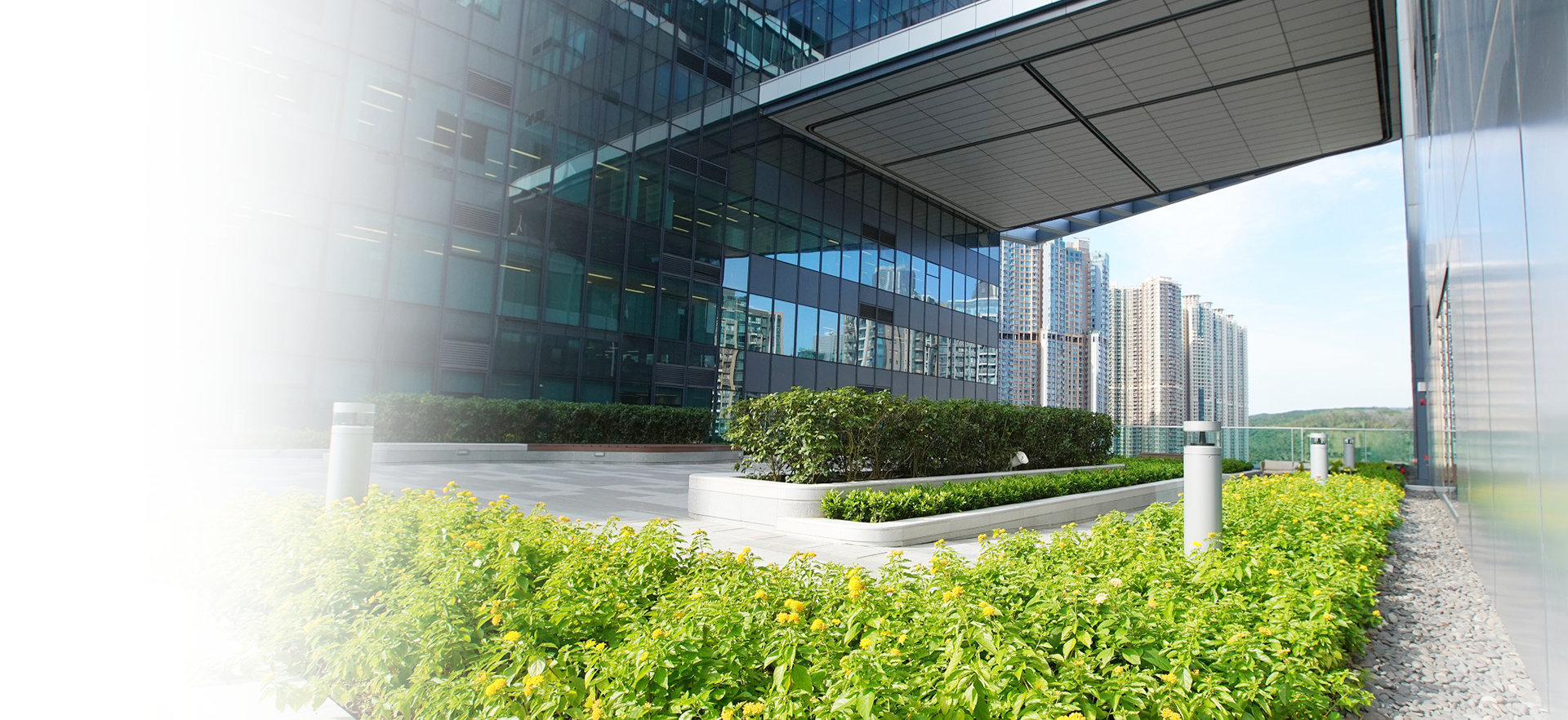




The department has all along recognised the importance of environmental protection and sustainable development to Hong Kong. Therefore, we are committed to ensuring that all services delivered to the public and our internal operations are in compliance with environmental protection principles and practices and in accordance with the requirements under the relevant environmental legislation, codes of practice and the Clean Air Charter. Reviews on green measures are conducted from time to time for continuous improvement in our green performance. We also encourage staff members to actively adopt green practices in both the workplace and their everyday lives.

The department's power consumption in 2024 decreased by 1.96 per cent compared to the previous year, while energy performance increased by more than
 3.8
%
3.8
%
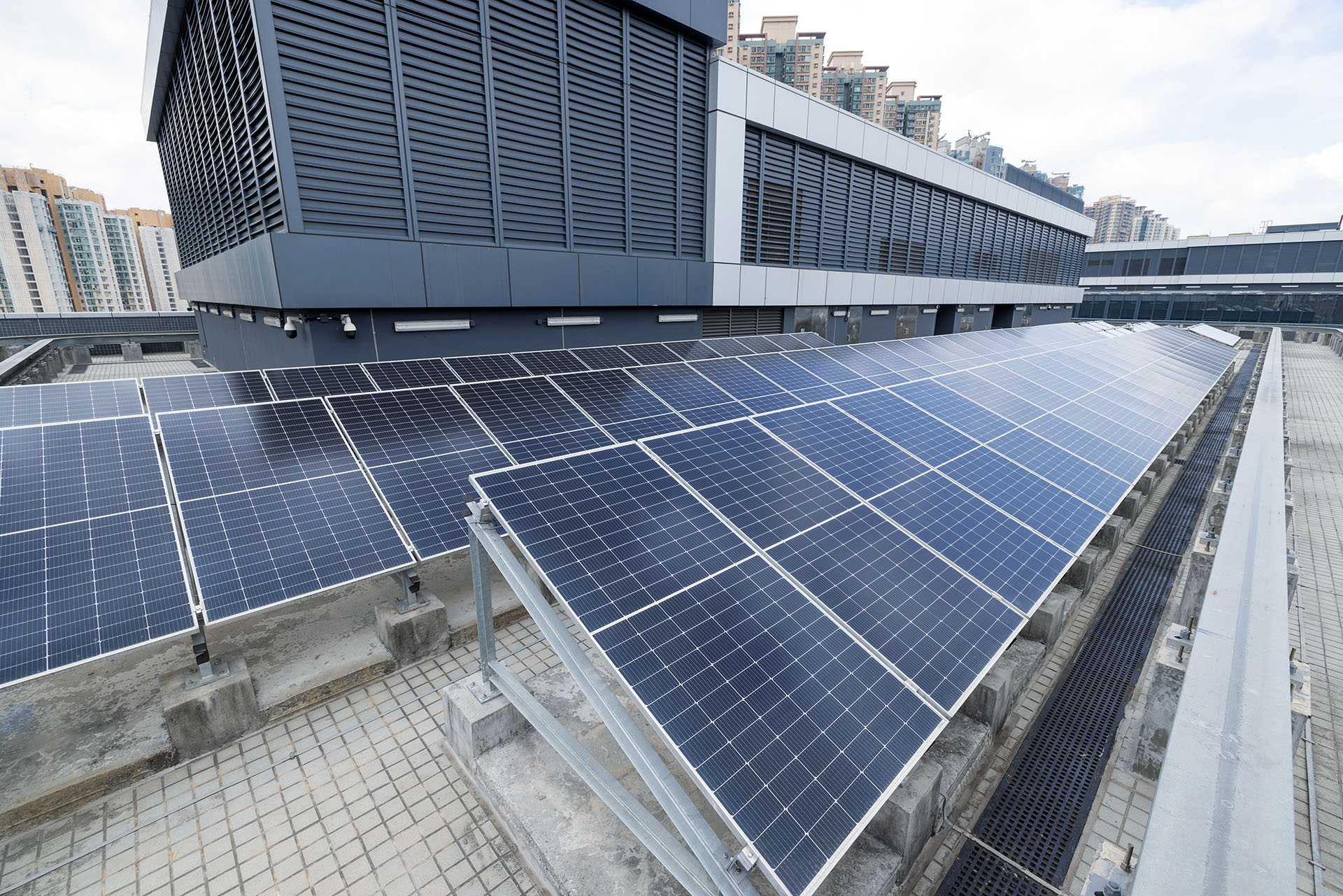
The Immigration Headquarters has adopted various energy efficient features and renewable energy technologies, including photovoltaic system and solar water heating system.
The Departmental Secretary is appointed as the Green Manager of the department. He is responsible for overseeing, reviewing and formulating various environmental protection measures in the department. Division heads are assigned to explore opportunities to adopt green initiatives and monitor the energy conservation measures to be implemented in offices under their purview. Energy Wardens are appointed at sub-divisional level to ensure the effective implementation of green housekeeping measures by conducting regular inspections in office premises and to maintain the staff's awareness of the importance of persistent conformity to the housekeeping measures. Reviews and audits of green management practices focusing mainly on energy saving are conducted by Energy Wardens on a quarterly basis.
The Resources Management Committee, chaired by the Deputy Director (Enforcement, Systems and Management) and consisting of members of senior management, closely monitors paper and energy consumption in its monthly meetings. The consumption records are regularly updated and uploaded to our intranet portal to enable managers at all levels to have a holistic view of the consumption of resources, which facilitates their monitoring process.
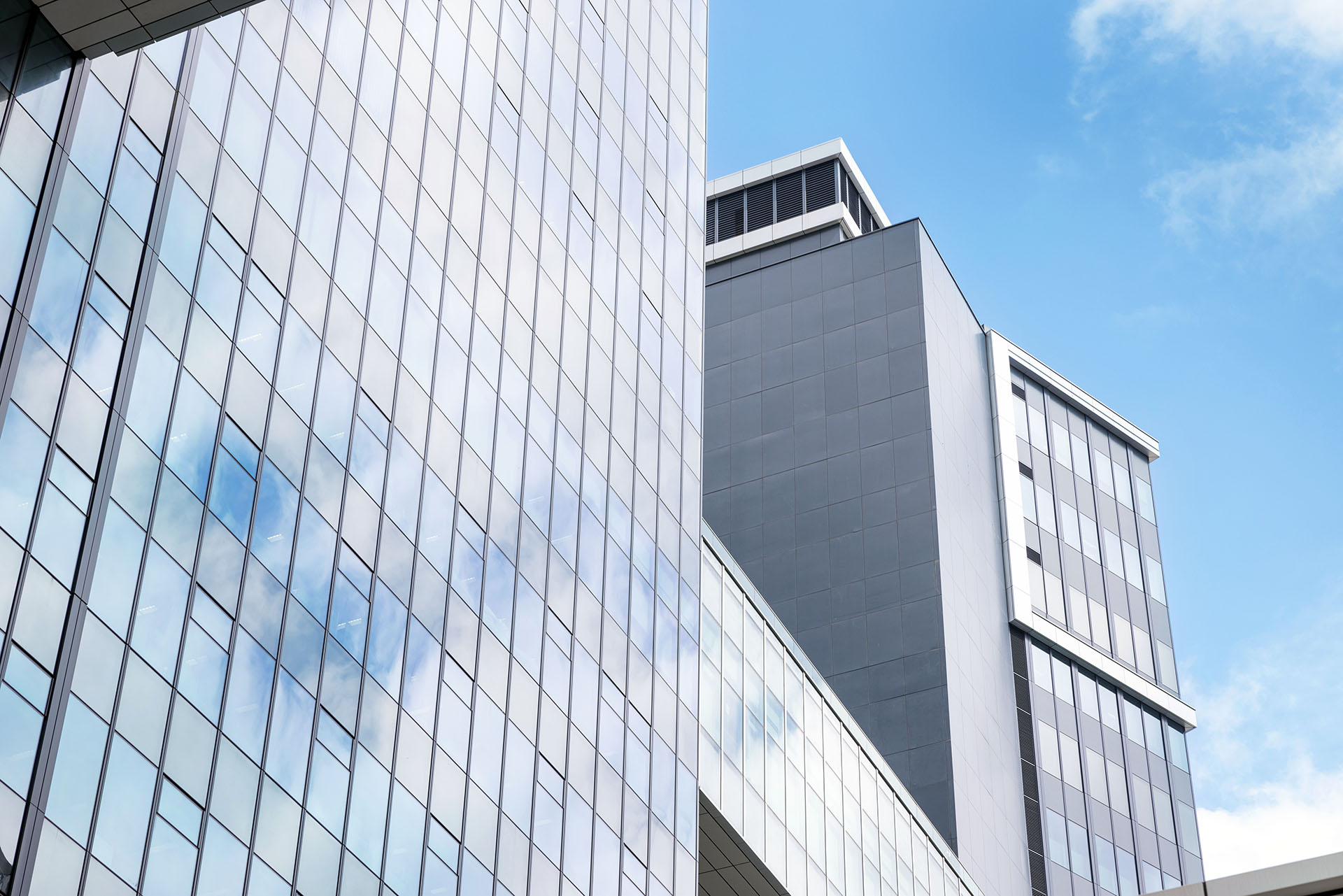
The facade of the headquarters incorporates multiple features to enhance indoor natural lighting, mitigate glare impact and improve visual comfort while increasing energy efficiency.
The department's energy consumption in 2024 decreased by 1.96 per cent when compared with that in the previous year, with the total consumption being about 49 million kWh. To support the government's energy target of improving the overall energy performance by 6 per cent in 2025, we will closely monitor the departmental energy performance. This year, our energy performance has already been improved by more than 3.8 per cent. The department will continue to implement a series of energy-saving measures to reduce energy consumption.
The department has been working in close collaboration with the Electrical and Mechanical Services Department (EMSD) to identify and implement various practicable energy-saving measures. For instance, air-conditioning and cooling systems are regularly inspected and necessary maintenance is conducted to control the electricity consumption. The department has also actively implemented recommendations from the EMSD by replacing the aged air-conditioning units with parts of higher energy efficiency.
To reduce energy consumption as far as practicable, the department will continue to take the following green measures:
| Green Measures Taken | |
Lighting |
|
Air-conditioning |
|
Office Equipment |
|
Water Saving |
|
Others |
|
Our Immigration Headquarters in Tseung Kwan O has adopted a building design that allows 'energy saving at source' with high energy efficient equipment and systems, and is utilising renewable energy generating facilities to offset energy consumption.
To support the use of low-carbon construction materials, the materials for the Immigration Headquarters were primarily sourced from within 800 km of the site during construction. For instance, most of the concrete was obtained from nearby regions with a view to reducing carbon emissions from transportation.
In terms of passive energy-saving designs, the facade of the headquarters incorporates multiple features to enhance indoor natural lighting, mitigate glare impact and improve visual comfort while increasing energy efficiency. All indoor spaces are equipped with occupancy detection sensors and daylight responsive dimming controls, whereas the curtain wall is made with materials of high light transmittance and a low shading coefficient, so as to optimise daylight utilisation.
In addition, the Immigration Headquarters has adopted various energy efficient features and renewable energy technologies, including:
Amongst the above technologies, the 186 photovoltaic panels and 20 solar water heating panels installed on the rooftop of the headquarters generated around 58 MWh of electricity and saved around 34 MWh of energy respectively in 2024, with the former connected to the electrical distribution system to offset our consumption, resulting in savings in the corresponding energy costs.
For greening features, the headquarters provides landscaping and vertical greening for environmental and amenity benefits. Furthermore, for recycled features, the headquarters is adopting a rainwater harvesting system for landscape irrigation with a view to achieving water conservation.
To implement the Clean Air Charter, which aims at improving air quality in Hong Kong, the department adopted the following measures in daily operations to minimise the adverse impacts of our vehicles and vessels on the environment as far as practicable:
The total fuel consumption of our vehicle and vessel fleets increased by 5.86 per cent from 865,501 litres in 2023 to 916,191 litres in 2024 following the department's full resumption of normal operations. On the other hand, to promote green transport and the use of electric vehicles (EVs), the department has procured 5 EVs for the departmental fleet and installed charging facilities for EVs in the car park of the headquarters. The department will continue to make its best efforts to minimise the fuel consumption and emissions of our vehicle and vessel fleets.
The department has been committed to advocating the reduction of paper consumption. However, our paper consumption in 2024 increased by 1.31 per cent when compared with that in the previous year, due to the expansion of services and increase in workload. The department will make sustained efforts to reduce paper consumption with a view to introducing its diversified range of measures to minimise paper consumption both externally and internally, including:
Externally
Internally
The green measures listed above have been widely accepted by both members of the public and our staff. The department will continue to adopt information technology as far as practicable and closely monitor our paper consumption to create a paperless work environment.
To raise the staff's awareness of the benefits of waste recycling for the environment, waste separation bins and recycling corners are set up in staff pantries. Since the relocation to the new Immigration Headquarters in June 2024, over 22 tons of materials have been recovered for recycling while the total quantity of waste disposed of is around 106 tons. The department will strive to strike a better balance between waste disposal and recovery.
Apart from ordinary waste, other recyclable waste, like glass bottles, has also been collected through collection boxes. Besides, a food waste composter has been installed at the headquarters for food waste collection and recycling.
To further minimise solid waste and protect the environment, the department continued to return used printer cartridges to suppliers by means of trade-in. The department also procured stock items according to green specifications to ensure that the products to be purchased would make minimal adverse impacts on the environment. For instance, preference was given to the procurement of wooden furniture with green labels or declared to be made from recycled wood.
The department will conduct carbon audits on those control points and buildings with annual electricity consumption exceeding 500,000 kWh, and the audit results have been uploaded to our website. The data will help us find out and measure our carbon footprints for the formulation of appropriate carbon reduction measures.
The department has all along endeavoured to provide a better work environment for its staff. In this connection, the Immigration Headquarters has participated in the Indoor Air Quality Certification Scheme to ensure good indoor air quality to safeguard the health of our staff. This year, the indoor air quality of the Immigration Headquarters was assessed as having achieved the 'Excellent Class' grading.
To foster a green culture among staff members, the department continued to disseminate to staff through emails and our intranet portal the latest news and useful information on environmental protection, such as encouraging staff members to minimise the use of disposable plastic tableware as urged by the Environmental Protection Department. Staff members were also encouraged to participate in environmental protection campaigns arranged by other departments/organisations, such as the 'Green Low Carbon Day' organised by the Community Chest, which encouraged participants to adopt a greener lifestyle, such as taking public transport and supporting the recycling of waste; and the 'Earth Hour' organised by the World Wide Fund for Nature, which encouraged participants to switch off non-essential lights at the appointed time for an hour.
To enhance staff's environmental awareness, the department has publicised green tips and the latest news relating to green matters at various offices. The information is updated periodically.
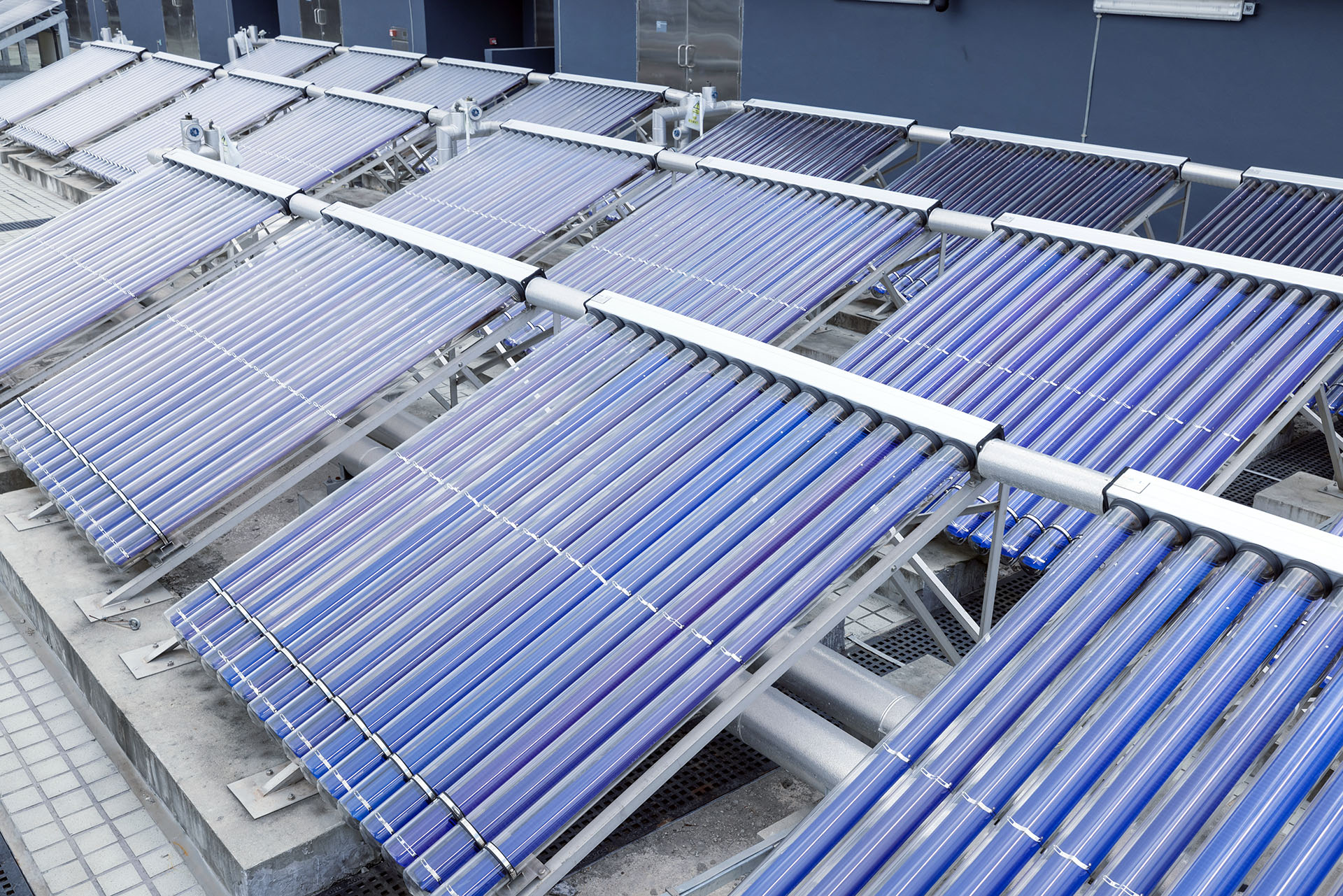
The Immigration Headquarters has adopted various energy efficient features and renewable energy technologies, including photovoltaic system and solar water heating system.
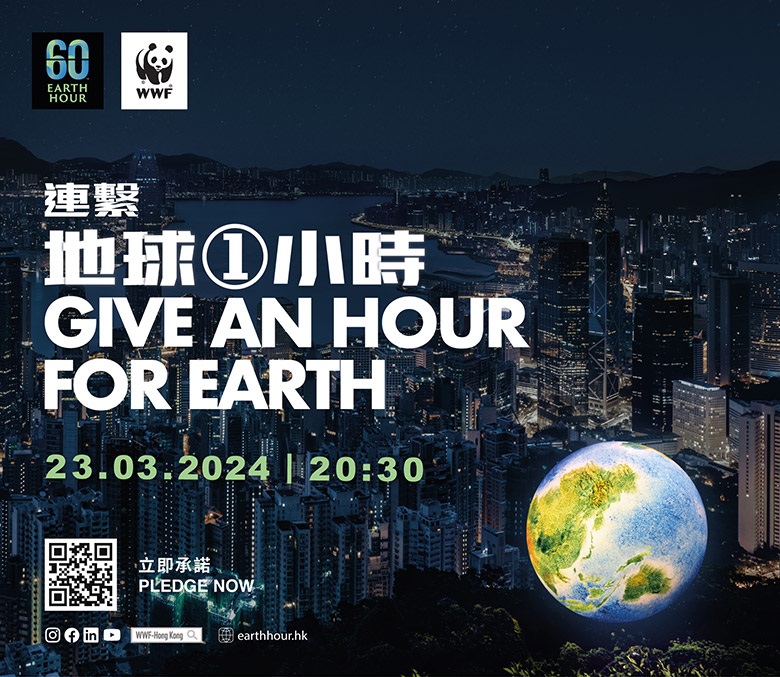
Staff members are encouraged to participate in environmental protection campaigns organised by different organisations so as to enhance their environmental awareness.
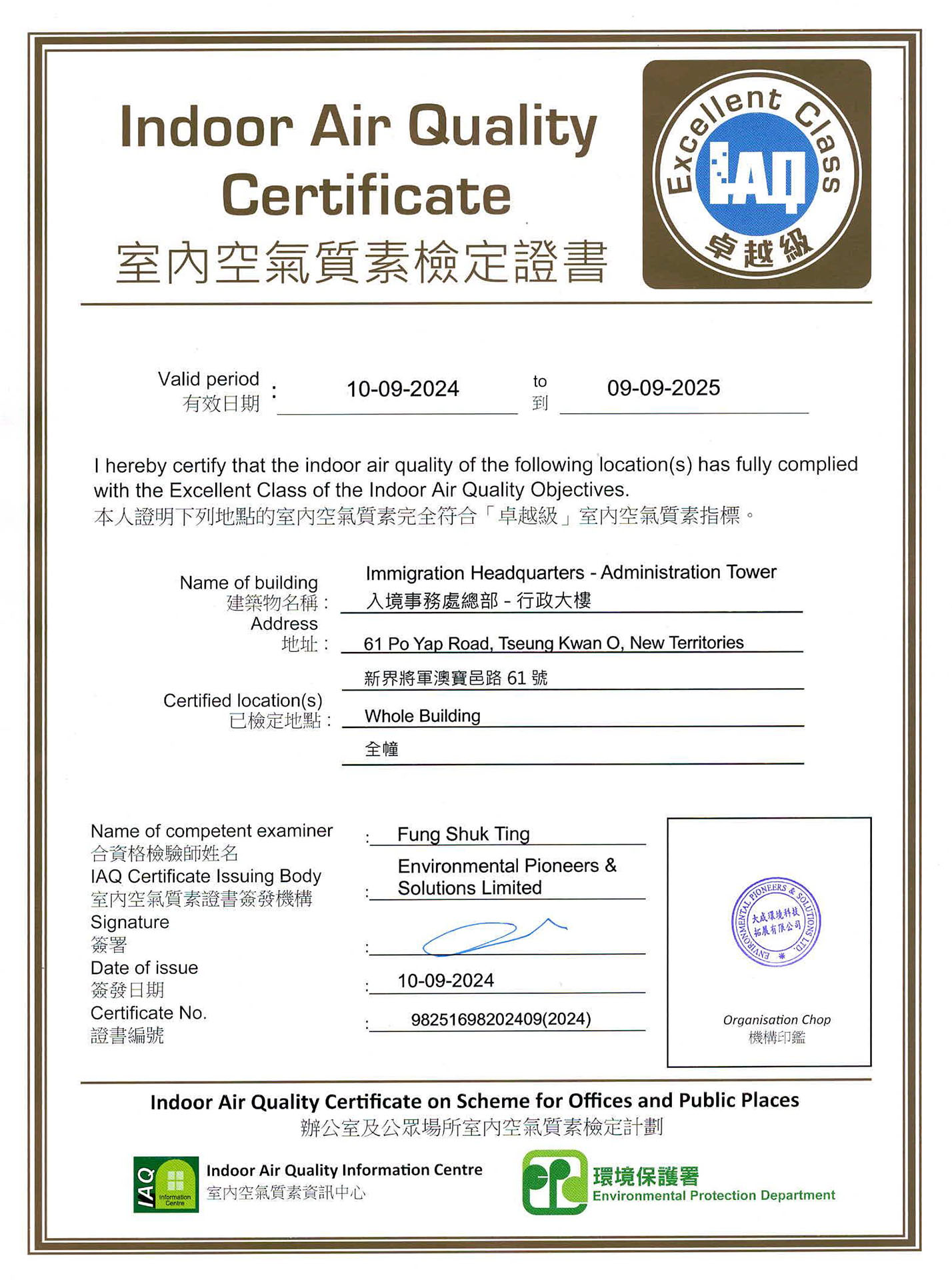
The indoor air quality of the Immigration Headquarters has attained 'Excellent Class' under the Indoor Air Quality Certification Scheme launched by the Environmental Protection Department.
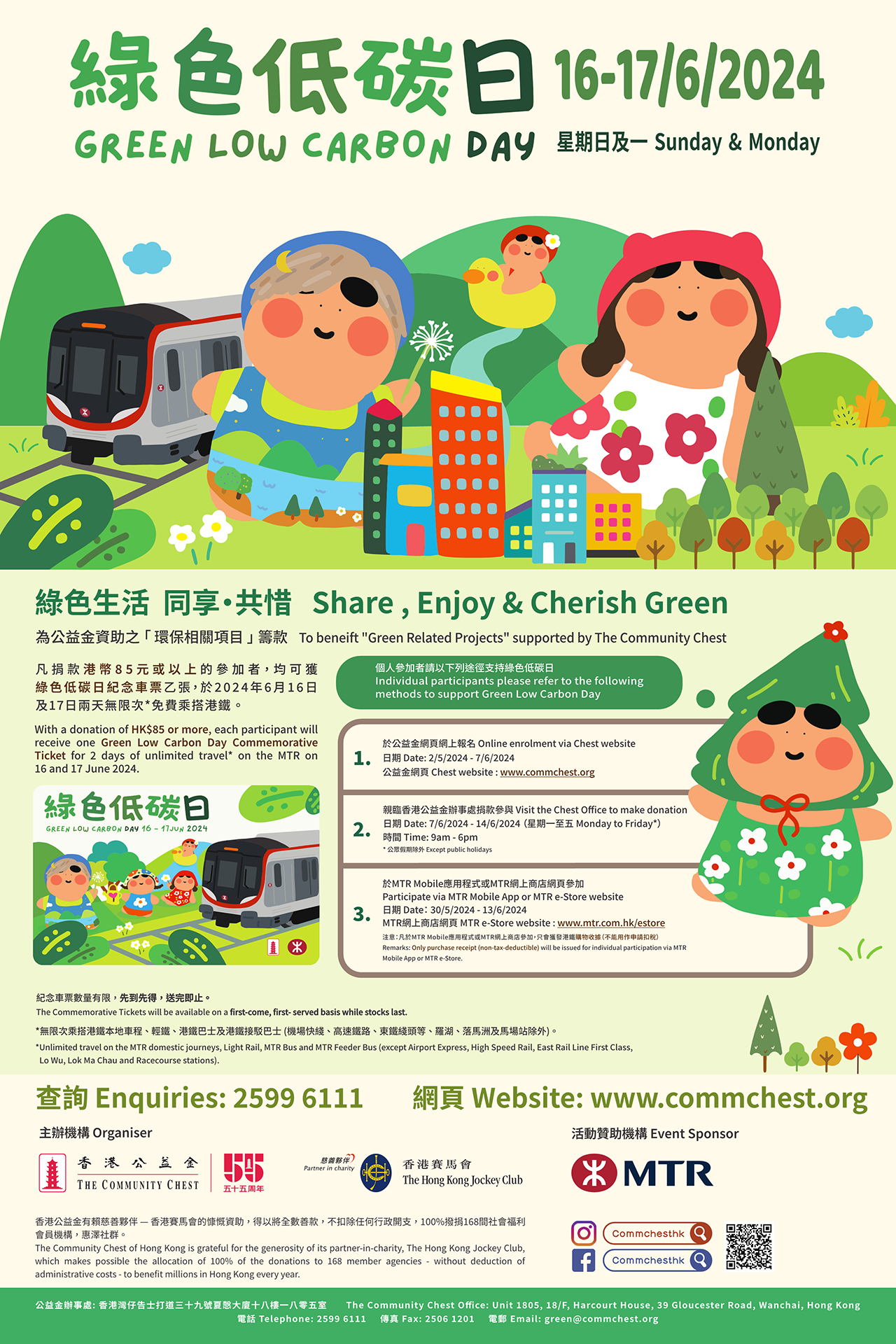
Staff members are encouraged to participate in environmental protection campaigns organised by different organisations so as to enhance their environmental awareness.
The support and cooperation of staff are the key to success in green office management. The department will continue to reinforce and extend the current housekeeping measures, adopt green management principles in all activities and take forward new green initiatives and targets as appropriate. The effectiveness of the green measures will be reviewed periodically in order to seek continuous improvement in the efficient use of energy and resources.